
iFM + FASE = iFS
by Martin Tappler — 2 September 2026
Topics: Interview
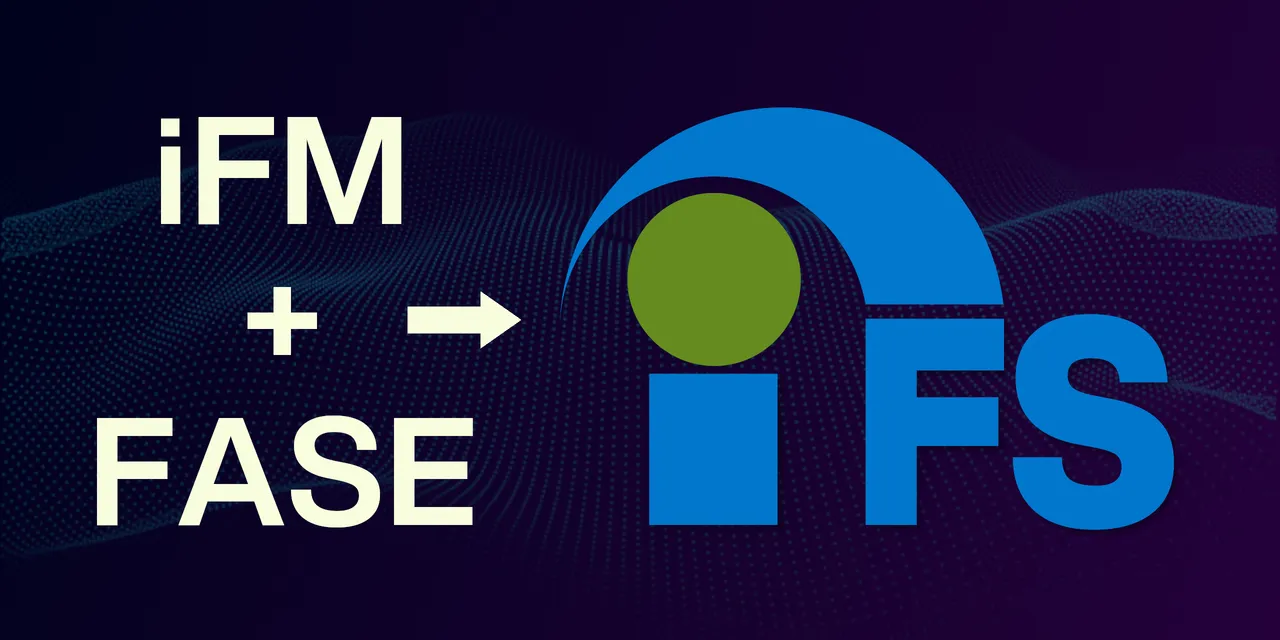
Ahead of the first edition of iFS at ETAPS 2027, we talked to Wolfgang Ahrendt and Marie-Christine Jakobs, the steering committee chairs of iFM and FASE, and now steering committee chairs of iFS, about the merger of the two conferences, the establishment of iFS, and what they envision for the new conference. With the call for papers for iFS 2027 now open, we take a closer look at the story behind the merger.
iFS is the result of merging FASE and iFM. What motivated the creation of a new conference?
There have been several aspects that motivated the merger. One was the observation that the formal methods community has many smaller conferences, leading to fragmentation of the community, and a lesser recognition of formal methods conferences than what the community deserves. As a countermeasure, the community should form fewer but stronger conferences. Another important aspect is the decision of the FM symposium to go annual, every autumn, instead of the 1½ years rhythm so far. This allowed us to envision another strong formal methods conference in the spring, as part of ETAPS, such that formal methods researchers can better plan their submissions over the year, with half a year in between FM and the new conference, iFS. Actually, both decisions, to merge FASE and iFM on the one hand, and FM going annual on the other hand, are mutually dependent, and were coordinated between the respective steering committees (SCs).
Why were FASE and iFM the natural choice for a merger? What common vision, principles, and strengths are shared among the communities of FASE and iFM?
FASE and iFM are a good choice for a merger because there already is some overlap in the community regarding topics, authors, and even SC members. Another important aspect has been that both the iFM and FASE SC were willing to give up their brand and merge their identities. In general, the merger was considered a chance to enlarge the community. Also, it was helpful that the conferences were not run too differently, e.g., in terms of artifact evaluation.
Why now? Was there a particular event that triggered the merger?
In early 2023, people from the FASE steering committee called out to various other formal methods events, with an invitation to discuss the conference landscape in the field. Several SC chairs of formal methods conferences followed the invitation and met at ETAPS 2023 in Paris, ETAPS 2024 in Luxembourg, and FM 2024 in Milan. These meetings also resulted, as a side effect, in better coordination of the dates of these conferences and other related events.
From the beginning of this process, people from FASE and iFM had a close exchange and a growing realisation that there is a lot to gain by joining these two conferences. As for the timing, one motivation to pursue the start of the iFS conference in 2027 was the fact that 2027 would have been the turn of FASE, and now of iFS, to nominate an invited speaker for the whole of ETAPS, which increases the visibility of iFS in ETAPS. However, taking into account that organising the merger takes time and that organizing the next conference edition in ETAPS starts shortly after its last edition, it was also the earliest date possible.
Can you give us a look behind the scenes of establishing iFS by merging two existing conferences? What were some of the challenges, and how did you coordinate the process between the two steering committees?
We established a working group for the merger with members of both steering committees, including their SC chairs. The working group was approved by both steering committees via vote and given the task to prepare the merger. The working group met in several online meetings. First, we discussed the scope of the new conference, drafted an example call for papers, and developed suggestions for the conference name. Later, the group discussed new bylaws and PC chairs of the first edition. From time to time, we went back to both steering committees, asking for feedback on the state of affairs. When reaching important milestones, both SCs voted on the respective suggestions. While sometimes the vote only asked for consent, the conference name and, in particular, its abbreviation required a complex voting scheme, including rules on how to combine potentially deviating voting results of the two SCs.
Finding a new long name for the merged conference was surprisingly smooth. But it was a bigger challenge to find a short name. Some early candidates for short names caused a lot of friendly but controversial discussions within either of the steering committees, until “iFS” was coined and got good support in both committees. Another challenge was to identify the right PC chairs for the first edition of iFS, in such a way that the profile of both conferences is perfectly represented, and in a way that signals the high ambitions of this new endeavour. We feel very lucky that we could recruit as PC chairs two big shots, Erika Ábrahám and Marsha Chechik, who represent these aims perfectly.
As iFS takes shape, which aspects of FASE and iFM would you like to preserve?
It is important to keep the integration aspect from iFM and possibly the extension from software to systems, while we should keep from FASE that we do not only consider formal methods but also systematic approaches supported by non-formalised artifacts and evidence.
How does iFS position itself in the ETAPS ecosystem? How does it complement and differentiate itself from TACAS, ESOP, and FoSSaCS?
From a coarse level point of view, TACAS focuses on tools, ESOP on programming languages, and FoSSaCS on theory. iFS complements this with its focus on methods. In addition, iFS is not only interested in software, which is traditionally the focus in ETAPS, but also in systems in general (like, for instance, cyber-physical systems) that are not necessarily analyzed at the software level.
If you had to describe the “perfect” iFS paper, what would it look like? Are there particular combinations of foundations, formal methods, software engineering, or AI that you hope to encourage?
We would rather not narrow down the potential topics by suggesting particular directions or combinations as being ideal as opposed to others. Every high-quality contribution to foundations or formal methods for software or systems is the perfect contribution to iFS. Having said that, we encourage, among others, novel integrations of techniques that have not been combined so far.
There is a rapidly growing usage of AI for software and system engineering. We are convinced that this development increases the demand for formal methods, but also that formal methods have to adapt to AI-driven development. In particular, integrating generative AI with rigorous, more traditional methods can lead to processes which are efficient, effective, and user-friendly, while still providing similar quality guarantees as traditional methods. To achieve that, more research is needed, much of which will hopefully be presented at iFS.
iFS brings together the research traditions of FASE and iFM. Is there a research topic—perhaps at the intersection of these two communities—that you feel is currently underexplored and deserves more attention?
One underexplored topic at the intersection of FASE and iFM is the synthesis of software and systems. Developing synthesis methods that provide certain quality guarantees for the generated product, e.g., following the correctness-by-construction principle, is of particular interest and may be approached in the near future in combination with generative AI.
Conference rankings are an important consideration for many researchers, especially early-career academics. Can you share your thoughts on how iFS will be positioned in conference ranking systems, like ICORE?
iFM and FASE are both B-ranked conferences in ICORE. This implies that the merger, iFS, should be B initially. But we do not yet know whether that is also the viewpoint of ICORE. Either way, we have the clear ambition to build a conference that is stronger than iFM and FASE were as individual conferences, and we hope that this also manifests in the ranking. On the other hand, while we will do our best to make iFS well-ranked, we have lately seen formal methods venues being downgraded for no good reason. Good rankings are relevant, but building a strong and engaged iFS community is more important for the success of iFS.
What would a successful first edition of iFS look like for you?
We get a high number of high-quality submissions that are within the scope of iFS and that allow us to build an attractive program for iFM, FASE, and ETAPS. The keynote and the iFS sessions are well attended, and the attendees are engaged in the talks, e.g., asking the presenters many interesting questions. Also, iFS is well received by the iFM and FASE communities, which is reflected by submissions from community members to iFS as well as their attendance at the conference. Furthermore, the iFS conference should attract authors and attendees beyond the iFM and FASE communities.
Looking ahead ten years, what impact would you like to see from iFS’s first ten years?
We would like to see iFS become an established and well-known ETAPS conference—one whose submission deadlines and conference dates are fixed entries in the calendars of researchers working in formal and systematic methods. In other words, we hope iFS will become a relevant, influential, and reputable conference within the community. We would also like to see outstanding and influential papers published at iFS nominated for, or even receiving, ETAPS Best Paper Awards, and becoming strong candidates for future ETAPS Test of Time Awards.